How does a cell, an organism, a body, a house, a landscape, or a work of art find its form?
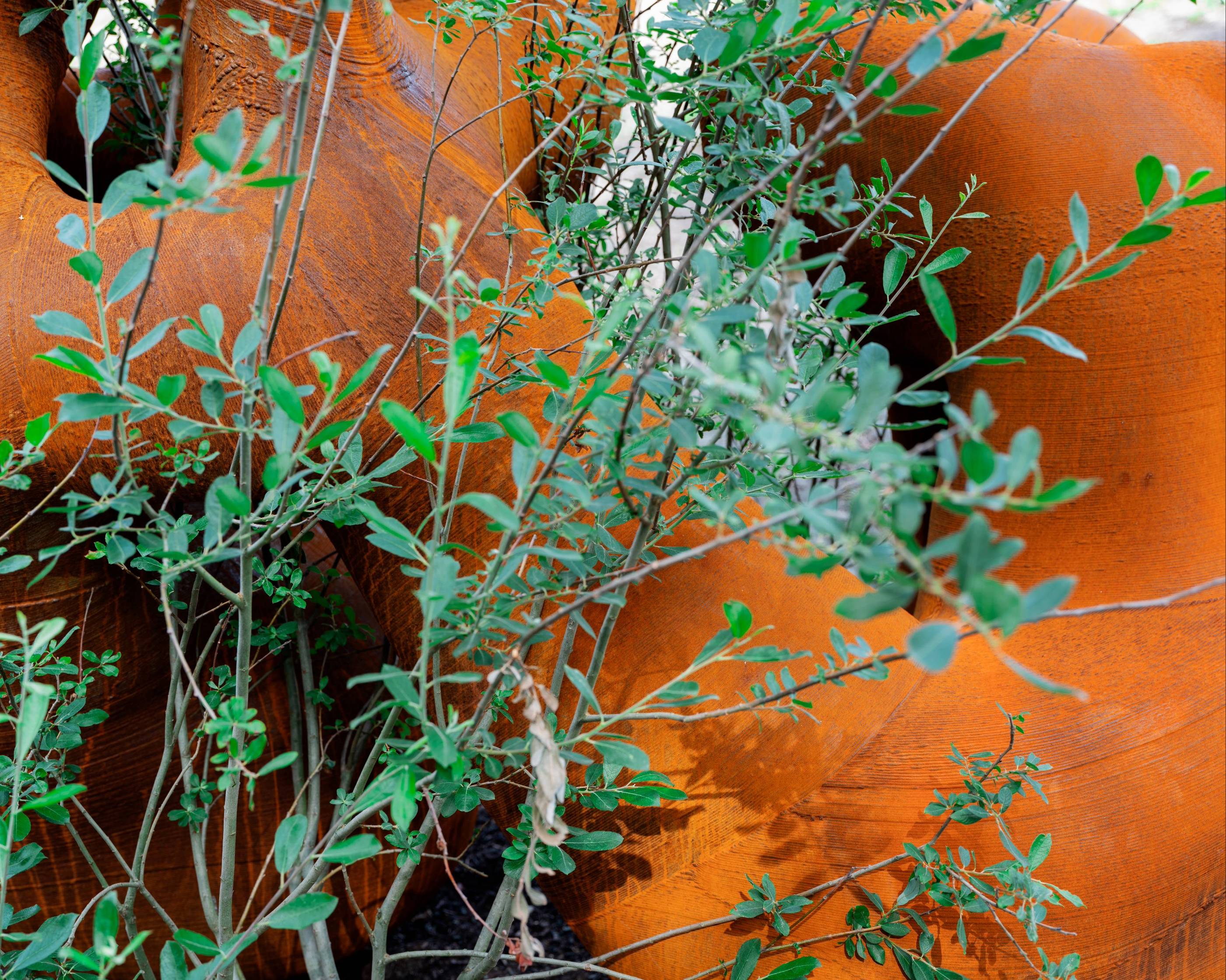
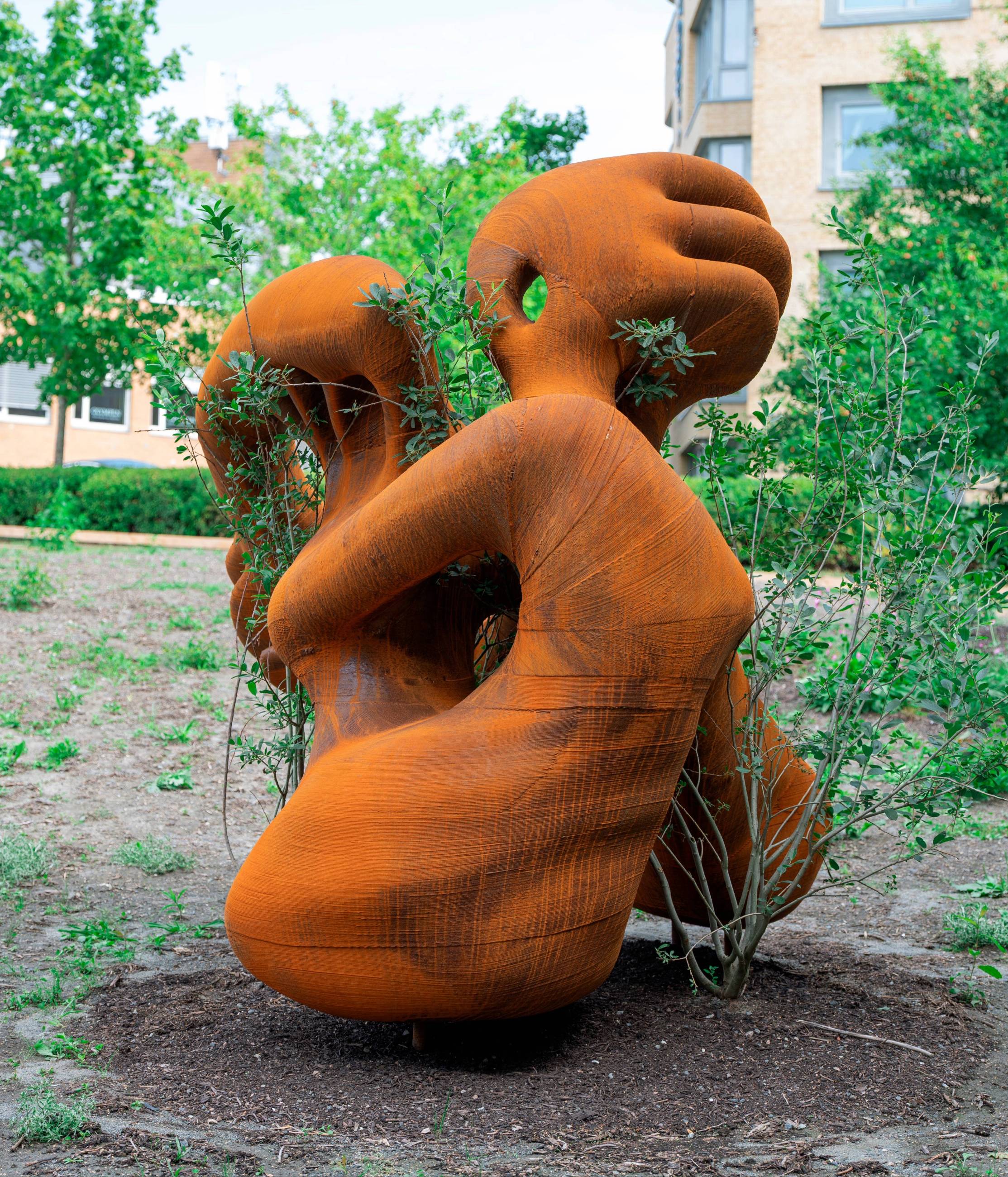
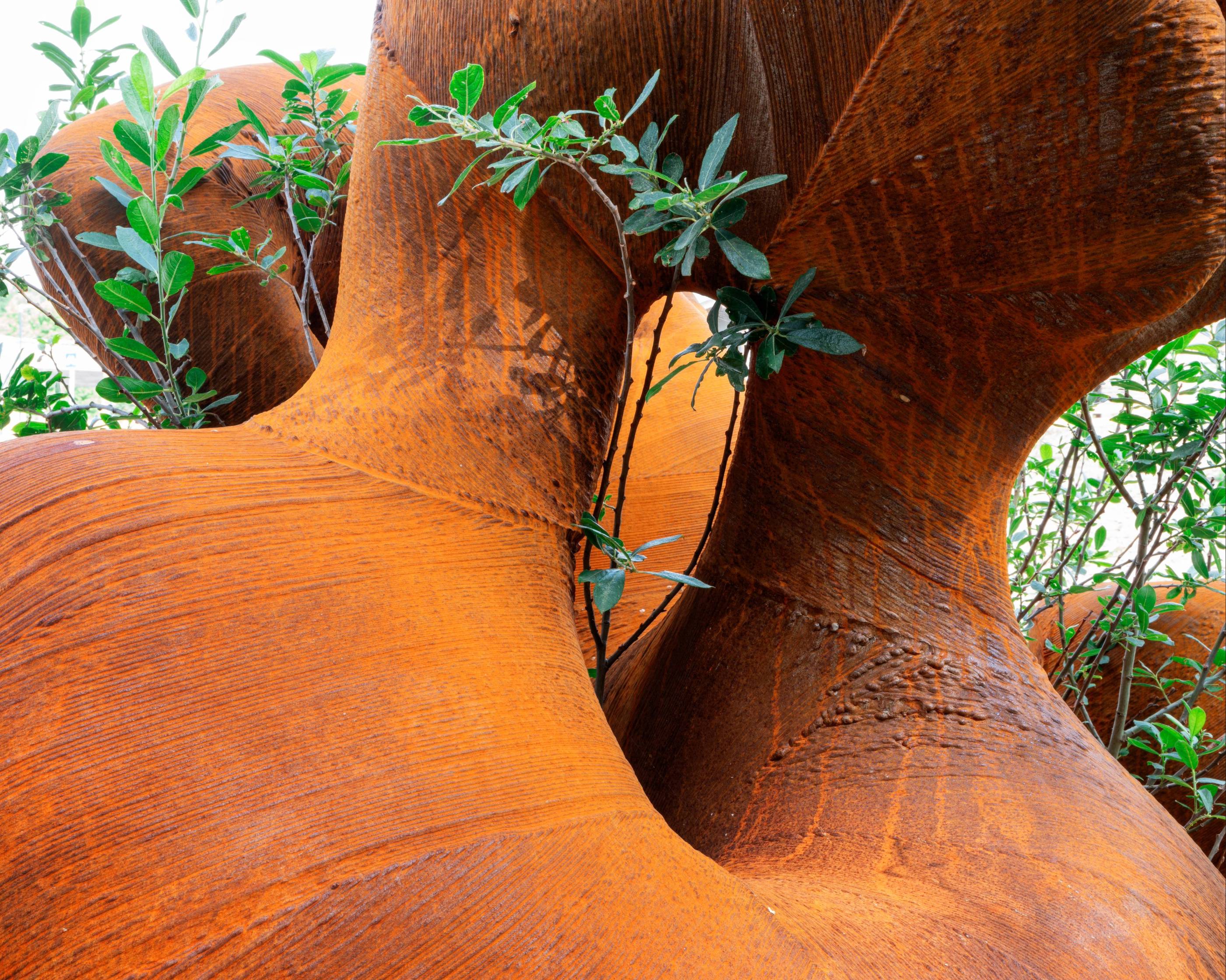
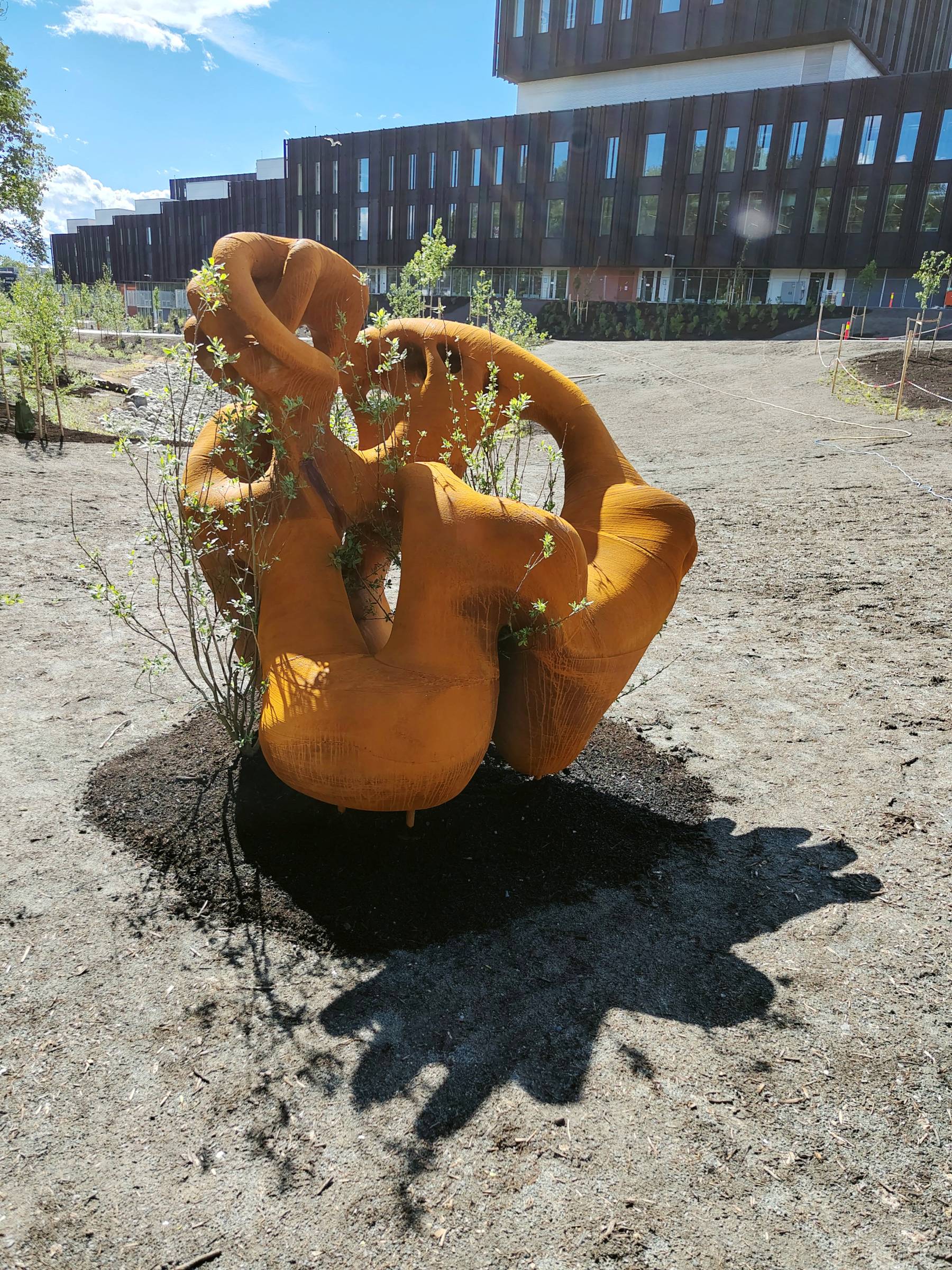
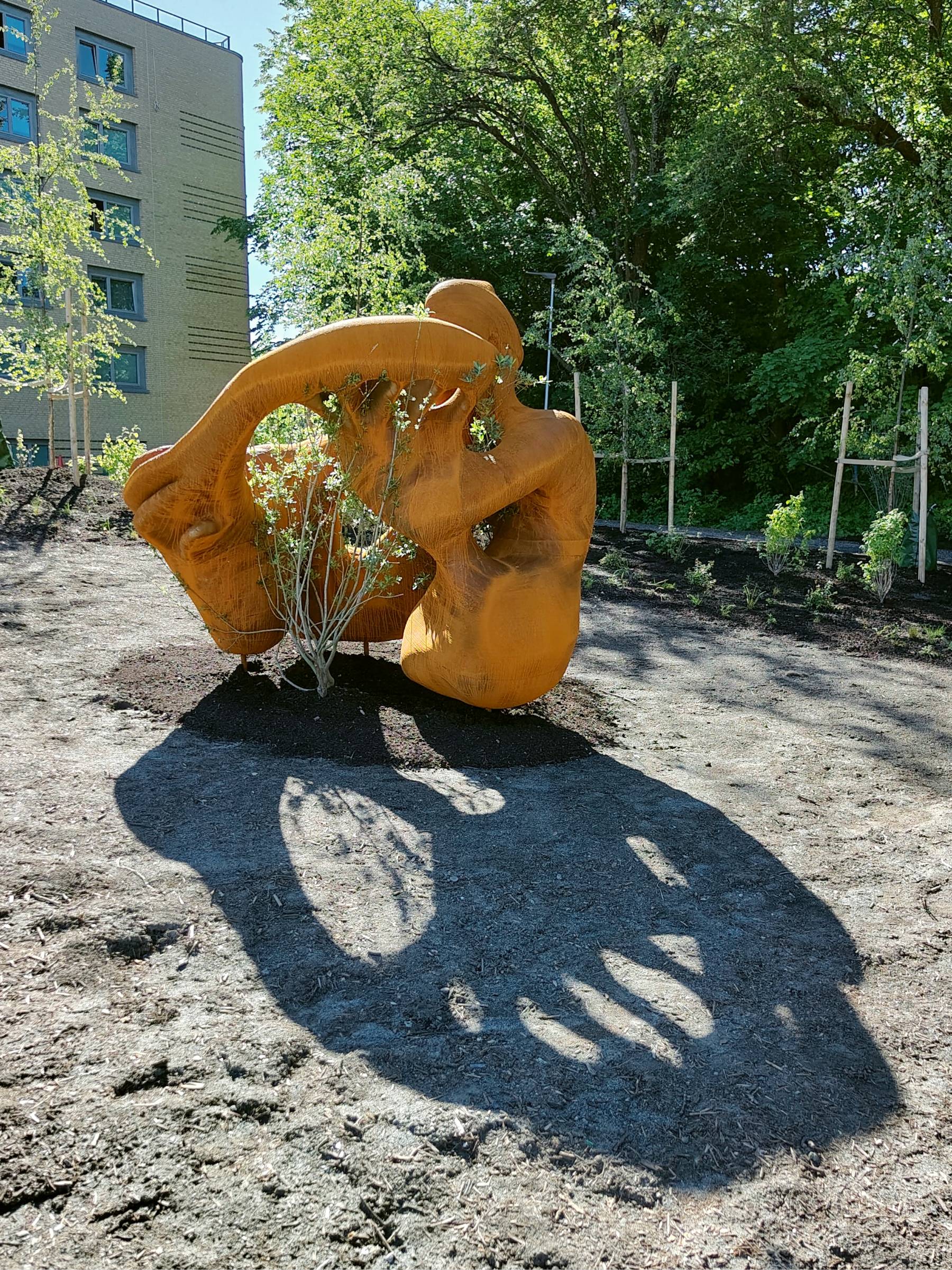
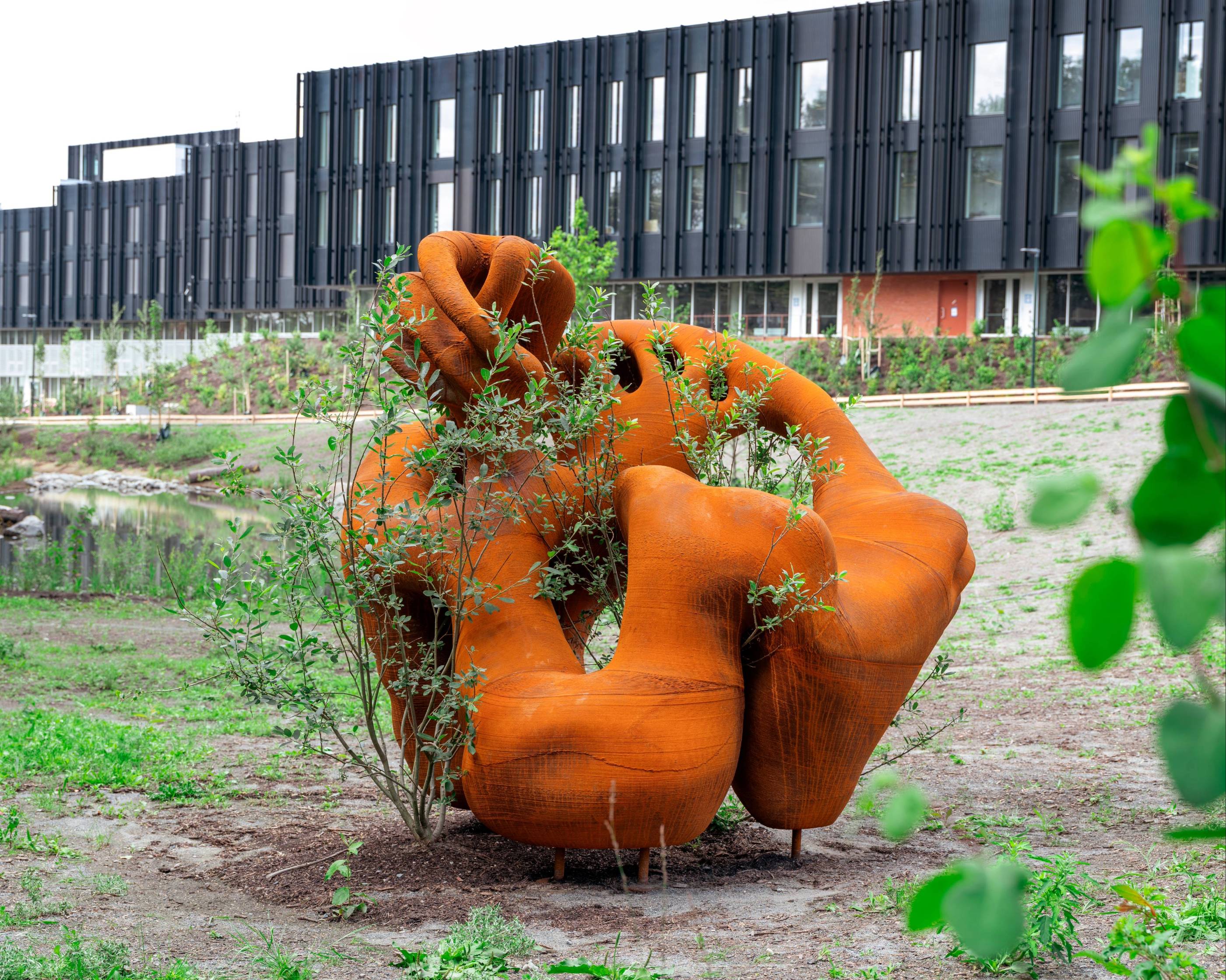
Taking Form is a sculpture consisting of a metal figure and two willow trees planted to grow around and into the sculptural form. The work is in slow transformation, a meeting between the living trees and the static, human-made form.
Seen from certain angles, the sculpture may bring to mind a human figure in a seated posture, as if in an embrace or carrying something on its arm. From other angles, what appears to be the figure’s head can resemble an ear or a clenched fist; a two-part neck becomes a thigh or an arm, a shoulder merges into a kind of animal head.
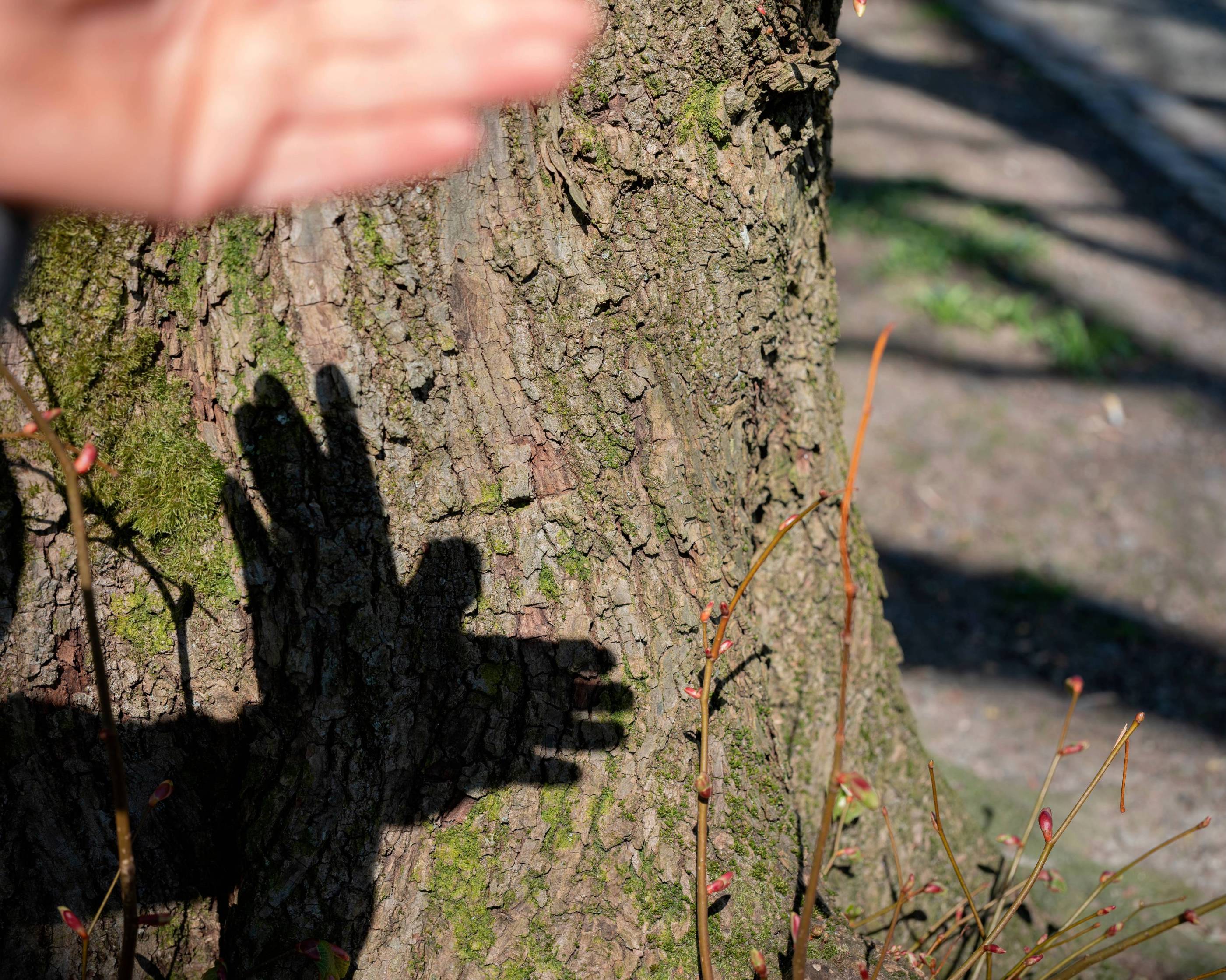
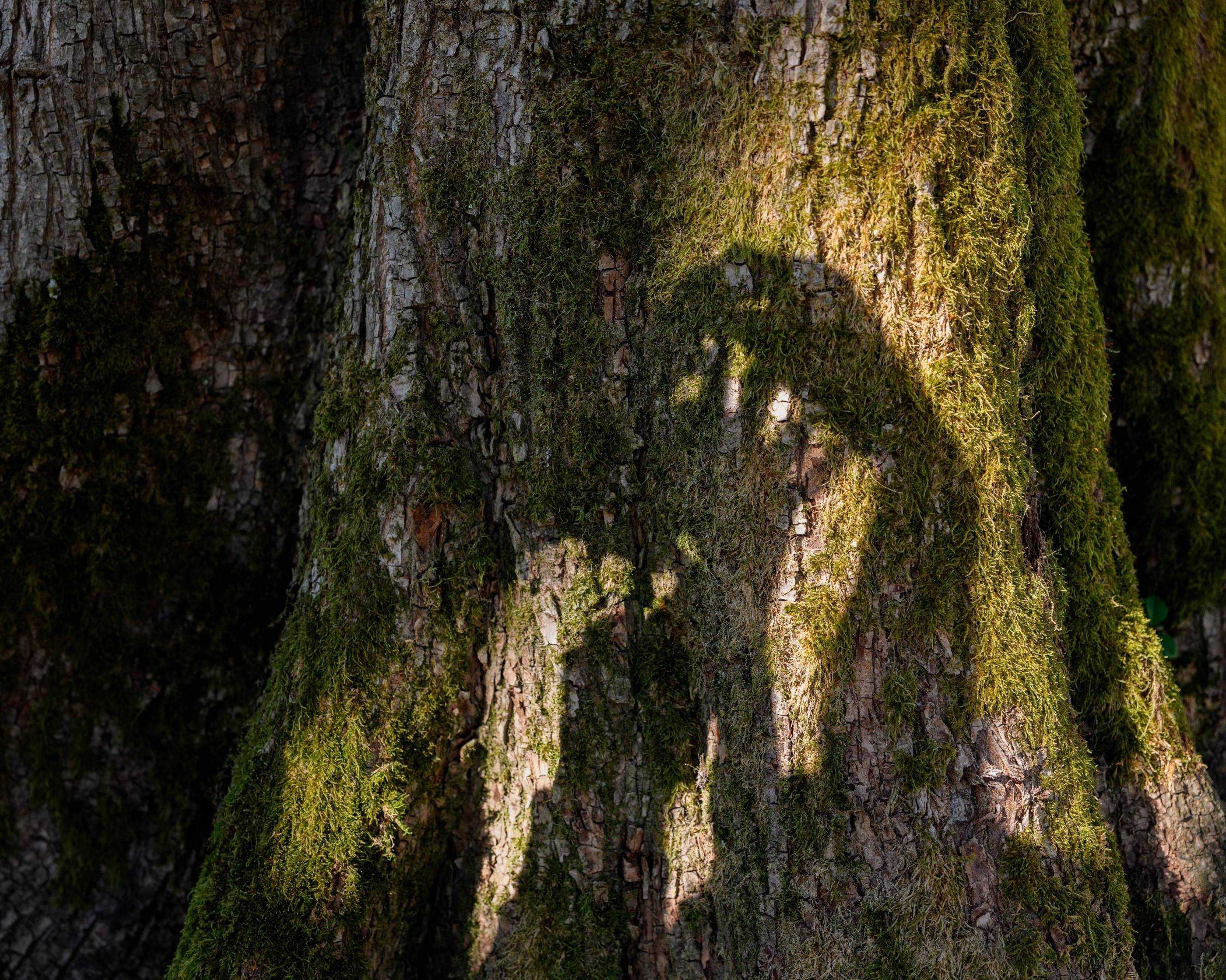
The sculpture is an imaginary figure shaped on the basis of shadow figures made by hands. At the height of summer, the sun will conjure up these shadow images at certain times of day: in the morning at 9:00 a.m., a shadow image forms in which one can make out hands and fingers, and which, seen from another angle, can resemble a skull. In the afternoon at 5:00 p.m., a shadow image forms that can resemble a bird with outstretched wings.
The shadow images originate from photographs of hand shadows. The starting point is bodily and concrete (hands) and at the same time fleeting and immaterial (shadows). The sculpture is a materialized shadow, and the two shadows the sculpture casts on the ground at the times mentioned live inside the form, even though for most of the time they are not visible. The shadow images are like a small secret, which someone may perhaps discover as they pass by and recognize something hand-like, bird-like or skull-like about it.
As the years go by and the willow trees grow larger, the sculpture and the shadow it casts will become dominated by branches and foliage.
The title Taking Form (in Norwegian Formdannelse) alludes to the various processes of form that meet in the work: the trees that grow, the sculpture’s figurations that merge into one another, and the shadow images that appear at certain times. In developmental biology, the term formdannelse, or morphogenesis, refers to the processes that create form and structure in an organism, tissue, or cells. In the process of making this artwork, taking form concerns a tension between shaping according to delimiting principles and shaping freely, following the imagination.
The metal sculpture is 3D-printed in Corten steel. The visible weld beads that the form is built from create a rough surface that shows how the form was constructed, bead by bead, part by part, and which may recall bark, wrinkled skin, or woven textile.
Production:
Metal work, WAAM 3D-printing: MX3D Artlab, Amsterdam
Consultant, digital workflow: Aldea, Bergen, by Cameron MacLeod
Consultant, 3D-modeling and landscape modeling: Soheil Hivad Nabi
Art assistant: Arne Skaug Olsen
Production assistant, pre-project: Mei Szetu
Commissioner:
Commissioned by: KORO for The Life Science Building, University of Oslo
Curators: Thomas Hestvold, Karen Tandberg og Elin Olaussen
Consultant: Trond Hugo Haugen
-

Taking Form. The Life Science Building, University of Oslo.
-
Taking Form. The Life Science Building, University of Oslo.
-
Shadow figure. Photo: Arne Skaug Olsen and Toril Johannessen.
-
Shadow figure. Photo: Arne Skaug Olsen and Toril Johannessen.
-
Taking Form. The Life Science Building, University of Oslo.
-
Taking Form. The Life Science Building, University of Oslo.
-
Taking Form. The Life Science Building, University of Oslo.